What Are the Causes of Air Pollution (How to Reduce Air Pollution)
Today, air pollution has become one of the more pressing environmental challenges. This affects not only the planet’s climate but also human health. Whether it’s the race to save biodiversity or the overall quality of life, air pollution is threatening.
Let’s make it simple with understanding: What are the causes of Air Pollution (How to reduce air pollution)? Why is there a crucial need for building sustainable solutions? Here is the complete guide that explores sources, impact, and effective ways to lower air pollution not only at the individual level but globally.
No matter how fond people are of living in modern societies, those bustling cities filled with vehicles, industrial waste, and more have an impact on air quality. The recent WHO reports on air pollution share unexpected data that millions of people each year die prematurely due to diseases that are linked to polluted air. Therefore, we need to identify the causes and take collective measures to make the air cleaner and the planet healthier.
What Is Air Pollution?
Typically, air pollution occurs when harmful substances are released into Earth’s atmosphere or air, which impacts/alters its natural composition. Such pollutants come from both human activities and natural events.
Commonly affected air pollutants are carbon monoxide, sulphur dioxide, nitrogen oxides, particulate matter, volatile organic compounds and ground-level ozone. Now, let’s understand what the causes of air pollution are (how to reduce air pollution). Therefore, it helps in targeting harmful emissions and provides practical ways to minimise their impact.
Major Causes of Air Pollution
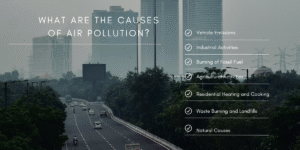
Vehicle Emissions
It’s one of the leading and commonly occurring air pollutants. Vehicle exhaust from cars, trucks, buses, bikes, etc, burns fossil fuels like petrol & diesel. And fuel burning releases carbon monoxide, nitrogen oxide and hydrocarbons. This is high in urban and suburban areas, particularly in the form of smog and particulate matter. The prevention of vehicular emissions is best for people’s and the planet’s health.
Industrial Activities
Urban areas with developed infrastructure like factories, refineries and power plants emit larger volumes of pollutants into the environment. Such pollutants include sulphur dioxide, heavy metals and other toxins. Industries that specifically use coal or petroleum-based energy sources contribute significantly to degrading air quality and health.
Burning of Fossil Fuel
No matter that there are renewable sources as well, electricity generation is still more dependent on fossils like coal, oil and natural gas. That impacts the atmosphere with high production of carbon dioxide. Eventually, fossil fuel combustion remains as one of the reasons behind greenhouse gas accumulation and acid rain.
Agricultural Activities
The contribution of the agricultural sector to air pollution is also getting high with the use of chemical fertilisers, pesticides and burning crop residues. Apart from this, ammonia emissions from livestock waste are also a silent contributor to the formation of air pollution in the form of particulate matter.
Residential Heating and Cooking
Globally, people still rely on wood, coal, kerosene and other fossil fuels for heating and cooking. Such fuels do impact the atmosphere with the release of carbon monoxide and soot, leading to serious health risks.
Waste Burning and Landfills
Over time, with rapid development, improper waste management practices have been a significant cause of waste burning and landfills. The open burning of garbage, emitting toxins and particulate matter in the surroundings, causes air and other types of pollution. Such landfills release methane, which is a powerful greenhouse gas, contributing both to air pollution and global warming.
Natural Causes
As most of the pollution is human-made, some natural events also impact the air quality. From volcanic eruptions to dust storms and even wildfires, they release large amounts of smoke, ash and gases into the environment.
Impacts of Air Pollution
The adverse effect of air pollution extends beyond the smog-filled skies. It impacts health, the environment and the economy.
- Human Health: The extreme exposure in polluted air causes chronic respiratory issues, asthma, lung cancer, heart problems and even premature death.
- Environmental Impact: Air pollution significantly damages crops, forests, and bodies of water. Acid rain and ozone depletion are direct outcomes of atmospheric pollution.
- Climate Change: Greenhouse gases trap heat that is responsible for the rise in global temperature and disturbing weather patterns.
- Economic Costs: The health concerns due to air pollution have an impact on finances with raised medical expenses, lost productivity, crop damage and climate concerns. All such causes impose heavy economic burdens globally.
These consequences are fair enough to conclude on a way to show why learning what the causes of air pollution are (how to reduce air pollution) is vital for every community.
How to Reduce Air Pollution
When there is a problem, so is the solution. Next come the productive and preventive steps to reduce air pollution. The effective solutions are;
-
Transition to Renewable Energy
Like using alternative sources (renewable sources), wind, solar, and hydropower to cut carbon footprint and emissions. Therefore, helps in reducing carbon dioxide and ensures long-term environmental sustainability.
2. Use Public Transport and Carpooling
This is good as it helps in reducing the number of vehicles on the road, which precisely cuts down the carbon emissions in the air. Good is encouraging the public transport, carpooling and cycling, which lowers the air pollution levels in urban centres.
3. Adopt Electric and Hybrid Vehicles
Today, governments and manufacturers are increasingly promoting electric vehicles as a cleaner alternative. EVs ensure no tailpipe emissions, which is a critical solution to reduce air pollution.
4. Improve Industrial Regulations
Significantly, strict emission standards and the installation of air filters are in place. Many manufacturing plants and factories are now using cleaner technologies that can greatly minimise industrial pollution and waste.
5. Sustainable Agricultural Practices
By adopting sustainable agricultural practices, farmers can reduce carbon emissions. This can be done by avoiding residue burning, using organic fertilisers and managing livestock waste efficiently. Taking sustainable agricultural practices seriously will help find ways to reduce air pollution in rural areas.
6. Waste Management and Recycling
The proper management for waste disposal, composting and recycling helps in reducing the need for open burning & minimising methane emissions from landfills. The effective waste segregation and collection system from authorities and municipal corporations is really helpful in lowering air and other pollution.
7. Energy Efficiency at Home
Smart energy appliances help in reducing unnecessary burden on planet Earth and help cut emissions from power plants.
8. Plant More Trees
Of course, the more greenery is linked to a healthier planet and wellness for living beings. So planting more trees acts as a natural air filter, helps to absorb carbon dioxide and release oxygen. The urban green spaces, rooftop gardens and reforestation help in making the air cleaner and healthier.
9. Educate and Raise Awareness
Creating awareness among the public through education and events focusing on the causes of air pollution (how to reduce air pollution) empowers individuals to take eco-friendly actions in daily life. Schools, communities, and governments should collaborate to spread awareness.
Government and Global Initiatives
Governments around the world are enacting policies to tackle air pollution:
- Imposing stricter emission norms for vehicles and industries.
- Promoting renewable energy subsidies.
- Monitoring air quality through satellite-based systems.
- Participating in international climate agreements such as the Paris Accord.
Everyone’s cooperation from the initial level is a must in creating awareness and addressing air pollution, which is, of course, a transboundary issue. Therefore, addressing the causes and prevention of air pollution requires joint global action.
What Individuals Can Do
While policy and technology play a huge role, personal choices matter too:
- Walk, bike, or use public transport whenever possible.
- Avoid using wood or coal-based stoves.
- Conserve energy and water at home.
- Support companies that prioritise sustainability.
- Participate in local environmental initiatives and tree-planting drives.
Conclusion
Your decoding of What are the causes of air pollution (how to reduce air pollution) gives a practical reach on acting wisely. Whether it’s vehicle emissions, industrial waste, fossil fuels, and agricultural practices that are major culprits.
Although this can be controlled with the adoption of cleaner energy, better waste management and eco-friendly living, this reverses much of the damage. By combining government policy, industry innovation, and individual responsibility, we can make our cities breathable again and secure a healthier future for generations to come.
| Home | Vkare | Fuschia | Physiovits | Dr.Snug |